Pros & Cons
Pros
- Exceptional image quality with sharpness across the frame and good bokeh rendering
- Lightweight design, making it suitable for street photography and travel
- Fast and quiet autofocus performance, particularly for video
- Excellent color rendering with warmer hues compared to previous versions
- Better performance in low-light conditions with f/1.4 aperture
- Well-constructed with a durable feel, despite being compact
- Great for astrophotography due to minimal coma and good corner sharpness
- The lens exhibits less chromatic aberration than its predecessors
Cons
- Lack of image stabilization (IS), which can be a drawback in low-light situations
- Some users noted higher distortion levels that require correction to achieve optimal sharpness
- Comparatively expensive, raising questions about value against the EF versions
- Limited outdoor usability in certain environments due to its susceptibility to distortion
- Not all users are satisfied with its performance in ultra-wide scenarios compared to zoom lenses
Verdict
The Canon RF 24mm f/1.4L VCM is generally well-received for its sharpness, bokeh, and lightweight design, making it excellent for street and travel photography as well as astrophotography. However, its lack of IS and relatively high price point lead some users to question its overall value, particularly against established EF models.
Specifications
| Focal Length | 24mm |
| Max Aperture | f/1.4 |
| Min Aperture | f/16 |
| Mount | Canon RF |
| AF Motor | Voice Coil Motor (VCM) and Nano USM |
| Filter Size | 67mm |
| Min Focus | 0.24m |
| Weight | 515g |
| Dimensions | 76.2 x 99.5 mm |
| Diaphragm Blades | 11 |
Frequently Asked Questions
Does the Canon RF 24mm f/1.4L VCM have image stabilization (IS)?
No, the RF 24mm f/1.4L VCM does not include built-in optical image stabilization. It relies on the in-body stabilization (IBIS) present in many recent Canon EOS R-series bodies. For stable handheld work in low light, users may need to lean on IBIS or use a tripod.
Is the lens suitable for astrophotography?
Yes-thanks to its fast f/1.4 aperture, excellent coma and chromatic aberration control, and good corner-to-corner sharpness, the RF 24mm f/1.4L VCM has quickly become popular for astrophotography. Minimal star trailing and preserved edge detail make it ideal for Milky Way or nightscapes.
How does it compare to the Canon EF 24mm f/1.4L II USM?
The RF version is sharper across the frame, produces less chromatic aberration, has more advanced autofocus that's much quieter for video, and is lighter-weight. However, the EF version can be found for less money and has similar build quality.
What camera bodies is this lens compatible with?
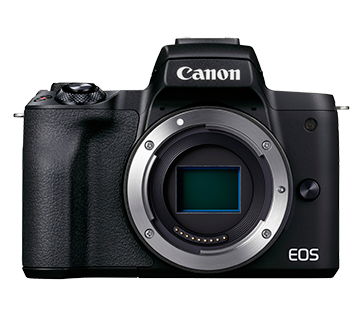
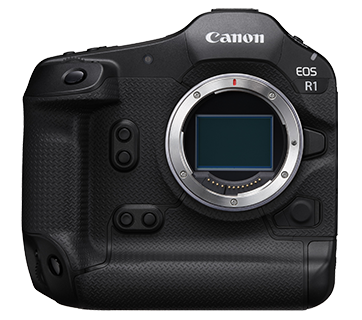
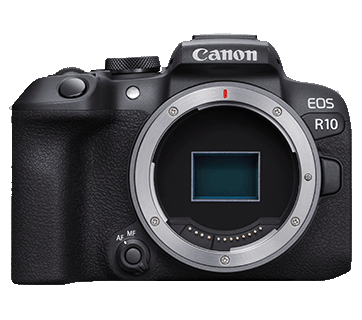
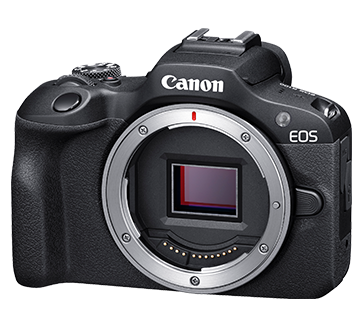
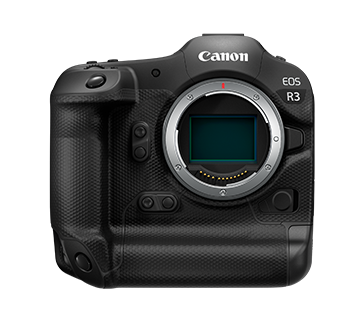
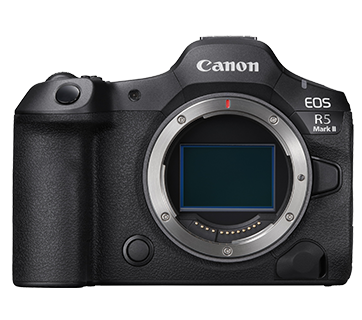
The RF 24mm f/1.4L VCM is designed for Canon RF-mount cameras, such as the EOS R5, R6, R6 Mark II, R8, R3, and RP. It is not directly compatible with Canon EF-mount DSLRs, nor with cameras from other manufacturers.
Is the angle of view or field distortion problematic for architecture?
The lens exhibits a moderate amount of barrel distortion uncorrected, which can make straight architectural lines bow slightly. For critical work, distortion correction profiles should be applied during post-processing to achieve rectilinear results.
Can I use standard screw-in filters with this lens?
Yes, the RF 24mm f/1.4L VCM uses a 67mm front thread, compatible with most standard filters-handy for landscape and travel photographers who use polarizers or ND filters.
Compatible Cameras
Camera bodies that work with this lens
Related Lenses
Other lenses you might want to consider