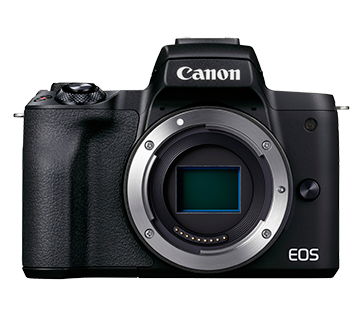

The Canon EOS M50 Mark II and Sony A6700 are both popular mirrorless cameras targeted at enthusiasts and content creators seeking lightweight yet capable APS-C options. Shoppers often compare these two because they cater to similar audiences looking for versatility in photography and video, but they represent different generations and technological philosophies. While the M50 Mark II is an affordable, approachable entry point into Canon's mirrorless lineup, the Sony A6700 is a much newer, higher-end model that leverages Sony's expertise in autofocus, video, and sensor technology.
Buyers weighing these cameras are typically choosing between Canon's user-friendly interface and broad beginner appeal, and Sony's class-leading performance packed into a compact, sturdy body. Key differentiators include sensor performance, autofocus sophistication, video features, and system expandability - all factoring into the creative ambitions and budget of the buyer.
Specifications Comparison
Detailed Comparison
Image Quality
Both the Canon EOS M50 Mark II and Sony A6700 employ APS-C sensors, though with slight differences: Canon's measures 22.3 x 14.9 mm and offers 24.1 megapixels, while the Sony has a marginally larger 23 x 15.5 mm sensor with a higher resolution of 26 megapixels. While both deliver excellent image quality for everyday use, the A6700's newer back-illuminated sensor technology provides improved dynamic range, better detail retention, and lower noise at higher ISOs.
The Sony also benefits from a broader ISO range out of the box (100-32000, expandable to 102,400), whereas Canon's ISO tops out at 25,600. In real-world shooting, this gives the Sony a notable advantage in challenging lighting conditions, with cleaner high-ISO files and more flexibility in post-processing.
Both cameras deliver pleasing color reproduction with their own manufacturer's signature. Canon's color science is often praised for its natural skin tones, while Sony's files are known for their neutrality and post-processing latitude. However, for demanding situations, landscape shooters, or those pushing creative post-work, the A6700's sensor leads.
Autofocus System
Autofocus is one area where the generational gap is most apparent. The Sony A6700 features a state-of-the-art 759-point phase-detection autofocus system, backed by AI-based real-time subject recognition and tracking. This translates to near-instantaneous focus acquisition, highly reliable eye and face detection (for both humans and animals), and effective tracking even in continuous burst modes.
By contrast, the Canon M50 Mark II uses Canon's older Dual Pixel CMOS AF, which, while smooth and accurate, offers far fewer focus points and lacks the advanced AI tracking. It's sufficient for everyday photography and vlogging, but struggles in high-speed action, low light, and fast-moving subject scenarios compared to the Sony.
For photographers and videographers who demand consistent, high-performance autofocus-especially with unpredictable or moving subjects-the A6700 is clearly ahead.
Video Capabilities
The M50 Mark II is a popular choice among beginner vloggers and YouTubers, offering easy-to-use 1080p video and 4K recording (albeit with a significant crop and limited autofocus). Its fully articulated touchscreen is a major advantage for self-recording, but its video specs are entry-level.
Conversely, the Sony A6700 is a powerhouse for hybrid shooters. It boasts 4K video at up to 120p without crop, advanced 10-bit color profiles, superb rolling shutter performance, in-body image stabilization (IBIS), and supports professional workflows. Autofocus during video is also highly advanced, allowing for tracking, smooth transitions, and accurate face/eye detection.
While the M50 II is friendly for casual content creation and streaming, the A6700 appeals to demanding filmmakers, serious YouTubers, or anyone wishing to push their video creativity without gear limitations.
Build & Ergonomics
Both cameras are compact and lightweight, but the Sony A6700 is slightly heavier (493g vs. the Canon's approximate 387g) due to its sturdier, weather-sealed construction. This makes the A6700 better suited for outdoor and travel photographers who need more durability in varied environments.
The Canon M50 Mark II scores points with its approachable ergonomics, intuitive menus, and fully articulated screen (a favorite among solo creators and vloggers). The A6700, while also offering a high-resolution articulating touchscreen, enhances usability with a more pronounced grip, dual dials, and a larger, higher-quality electronic viewfinder.
Ultimately, the M50 Mark II is built for convenience and accessibility, while the A6700 delivers a professional-grade feel, with added protection and customization.
Battery & Storage
Battery life is a noticeable difference: the Sony A6700 is rated for 570 shots per charge, roughly double what users often achieve with the Canon M50 Mark II (typically less than 300), thanks to its more recent efficiency improvements and larger battery. For extended shoots or travel, this translates to less battery anxiety and fewer spares required.
Both cameras use SD cards for storage, offering broad compatibility. Neither offers dual card slots, which is more common in higher-end bodies. The A6700's more robust file sizes-from higher-resolution stills and video-do demand higher capacity, faster cards for optimal performance.
Value for Money
While the Sony A6700 boasts superior specs across nearly every metric, this comes with a significant price increase: $1,400 for the body alone, compared to the Canon EOS M50 Mark II, which is widely available for less than half that price. For beginners, students, or those on a tight budget, the M50 Mark II represents strong value, allowing entry into interchangeable lens photography without a steep investment.
That said, the A6700 offers features and performance that future-proof your investment, catering to more advanced users and professionals who can fully leverage its capabilities. For those not seeking the latest AF tech or the most advanced video, the M50 Mark II remains an incredible bargain-even more so on the used market.
Which represents better value depends on your needs and intended use: The A6700 is a premium product priced competitively against its peers, but the M50 Mark II delivers exceptional utility per dollar for casual users.
Lens Ecosystem
The lens ecosystem is a key consideration with both cameras, but for different reasons. Sony's E-mount system is robust, with a vast selection of APS-C and full-frame lenses from Sony and numerous third parties (Sigma, Tamron, etc.). This gives A6700 users access to a wide variety of native autofocus lenses for virtually every budget and style.
Conversely, Canon's EF-M mount (for the M50 Mark II) is more limited, with Canon offering a modest native lens selection and relatively little third-party expansion. Adapted EF and EF-S lenses can be used via an official adapter, but add bulk and may compromise autofocus performance. For buyers planning to expand their kit with specialty glass, Sony's E-mount offers a clear advantage in both variety and ongoing third-party support.
Our Verdict
The Sony A6700 wins this comparison on account of superior image quality, advanced autofocus, professional-grade video, robust battery life, weather-sealed build, and a much wider lens ecosystem. It's purpose-built for enthusiasts and professionals who demand reliability and creative flexibility, and it will handle most photo or video tasks today and into the future. That said, the Canon EOS M50 Mark II is not without merit-especially for beginners on a budget or those focused on casual photography and vlogging. Its user-friendly interface, lightweight body, and proven performance make it a solid choice for developing skills or content without a major investment. If you are price-sensitive or only require fundamental features, the Canon remains excellent value. For anyone seeking to grow creatively, tackle demanding subjects, or future-proof their kit, the Sony is the clear winner.
Canon EOS M50 Mark II
Sony A6700
Also Compare
Frequently Asked Questions
Which camera is better for beginners?
The Canon EOS M50 Mark II is more beginner-friendly thanks to its intuitive menus, simplified controls, and helpful guides. It's also more affordable, making it an easy entry point for those new to interchangeable lens cameras.
Is the Sony A6700 worth the extra price over the M50 Mark II?
If you need advanced autofocus, robust video features, better image quality, and want to expand your lens collection over time, the A6700 is worth the investment. For casual shooters or those on a budget, the M50 Mark II offers excellent performance for its price.
Which is better for video: M50 Mark II or A6700?
The Sony A6700 is far superior for video with its 4K 120p recording, 10-bit color, reliable AF, and in-body stabilization, making it suitable for professional content creators. The M50 Mark II is adequate for simple vlogging or social media but lacks advanced video capabilities.
Is the lens selection better for Sony or Canon?
Sony's E-mount system offers a far wider variety of native lenses from both Sony and third-party manufacturers, making the A6700 a better choice for those wanting to build a flexible, future-proof system. The Canon EF-M system is more limited in native options.
Which camera is more portable for travel?
Both cameras are compact and easy to carry, but the Canon M50 Mark II is lighter and smaller. However, the Sony A6700's weather-sealed body and longer battery life make it more robust for varied travel situations.
Will the Canon M50 Mark II be enough for professional work?
While the M50 Mark II is capable of producing high-quality images, it lacks some reliability, durability, and advanced features that professionals often require. For demanding professional assignments, the Sony A6700-or other higher-end models-will serve you better.