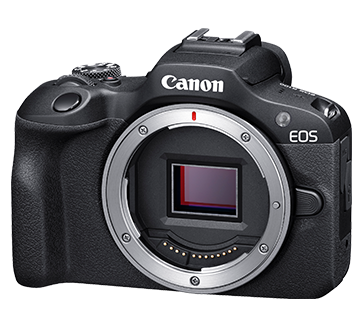
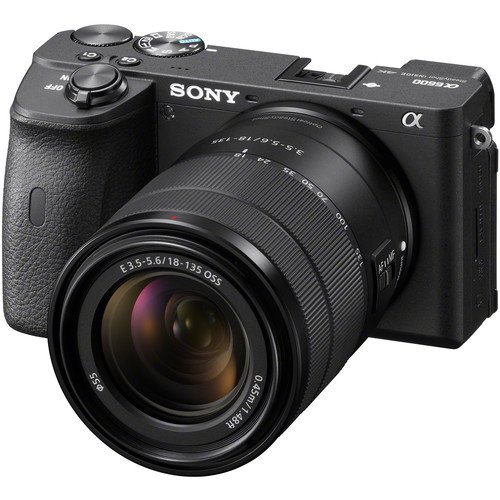
The Canon EOS R100 and Sony A6600 are two popular options in the crowded mirrorless camera market, appealing to photographers and videographers alike. Both models cater to enthusiasts and professionals looking for feature-rich systems that strike a balance between performance and price. The R100, released in 2023, represents Canon's entry-level APS-C offering, while the A6600, launched in 2019, is a more mature product in Sony's line-up, offering advanced capabilities. The key differentiators lie in autofocus performance, video capabilities, stabilization, and overall value, which can significantly affect a buyer's choice based on their specific needs and budget.
Specifications Comparison
Detailed Comparison
Image Quality
Both the Canon EOS R100 and Sony A6600 feature a 24-megapixel APS-C sensor, which ensures excellent image quality with a good dynamic range in varying lighting conditions. However, the A6600 has a broader ISO range of 100-32,000 (expandable to 102,400), allowing it to perform better in low-light situations compared to the R100's ISO range of 100-12,800. This expanded ISO capability can be crucial for night photography or indoor shooting without flash. That said, both cameras perform well at lower ISO settings, producing vibrant colors and detail in well-lit environments, making them suitable for various photography styles. Overall, due to its wider ISO range, the Sony A6600 edges out in this category as the better performer in low light.
Autofocus System
The autofocusing systems of the Canon EOS R100 and Sony A6600 differ significantly, with the A6600 sporting a whopping 425 autofocus points versus the R100's 143. This advantage allows the Sony camera to lock focus faster and track moving subjects with greater precision. Both systems utilize phase-detection autofocus, but the A6600 is also equipped with real-time Eye Autofocus, which is particularly beneficial for capturing portraits of people or pets. The Canon R100's autofocus is adequate for most situations and gives reasonable performance for stills, but it cannot match the speed and versatility of the A6600's system. Thus, the clear winner in autofocus performance is the Sony A6600.
Video Capabilities
When it comes to video capabilities, the Sony A6600 again has the upper hand. It offers 4K video recording at 30 frames per second, which is a significant draw for videographers. The R100, while capable of recording high-quality stills, has not been highlighted for any video specs, making it less appealing for video-centric users. The A6600 also includes features like advanced autofocus during video shooting, which further enhances its usability in this area. As a result, for those interested in video work, the Sony A6600 is the clear choice between these two options.
Build & Ergonomics
In terms of build and ergonomics, the Canon EOS R100 has a slightly smaller and lighter design, weighing in at 356 grams compared to the A6600's 503 grams. This can make the R100 more appealing for those who prefer a lightweight option for travel or long shooting sessions. However, the A6600's body is weather-sealed, providing extra durability and protection against dust and moisture, which is a significant consideration for outdoor photographers. The R100 has a simpler layout that may appeal to beginners, while the A6600 offers more customizable controls that will attract more advanced users. Thus, while the R100 is easier to handle, the A6600's durability and flexibility cater to a broader range of conditions, making it a more versatile option.
Battery & Storage
Battery life is another crucial aspect for serious photographers, and here the Sony A6600 performs notably better with a capacity of approximately 810 shots per charge, compared to the R100, which does not specify its battery life in the data. The A6600 uses the NP-FZ100 battery, which is larger and provides significantly longer use between charges. Both cameras support SD card storage, but the A6600 also supports UHS-II, enabling faster data write speeds for high-resolution images and 4K video, which can be vital for high-speed shooting scenarios. Thus, with longer battery life and better storage capabilities, the Sony A6600 wins this round.
Value for Money
In terms of price point, the Canon EOS R100 comes in at around $480 while the Sony A6600 is substantially more expensive at approximately $1400. For budget-conscious consumers, the R100 represents excellent value, especially for those who prioritize photography and are less focused on video and advanced features. The A6600, while pricier, offers higher performance and advanced features that justify its cost for professionals and enthusiasts requiring those specific capabilities. Therefore, the Canon EOS R100 provides the best value for those on a budget, while the A6600 will appeal to someone looking for a robust and feature-rich camera that can handle anything they throw at it.
Our Verdict
Overall, the Sony A6600 wins this comparison due to its superior autofocus system, video capabilities, and robust build quality. Its advanced features and performance make it the better choice for serious photographers and videographers who need versatility and reliability. However, the Canon EOS R100 offers excellent value for those who prioritize day-to-day photography and prefer a lightweight option for travel. It shines as a starter camera or for casual shooters not needing the advanced features of the A6600.
Canon EOS R100
Sony A6600
Also Compare
Frequently Asked Questions
Which camera is better for beginners?
The Canon EOS R100 is better for beginners due to its simpler controls and lower price point, making it more accessible for new photographers.
Is the Sony A6600 better for video?
Yes, the Sony A6600 offers 4K recording and advanced autofocus features that make it significantly better for video work compared to the R100.
Can the R100 elevate my photography skills?
Definitely! The R100 can help elevate photography skills, especially for those who are new, by providing a lightweight and user-friendly experience.
How does low-light performance compare?
The Sony A6600 has superior low-light performance due to its higher ISO range, making it more suitable for shooting in challenging lighting conditions.
What is the significance of weather sealing?
Weather sealing provides additional protection against rain and dust, making the A6600 a better choice for outdoor photography in various environmental conditions.