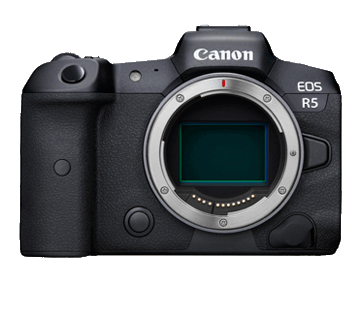
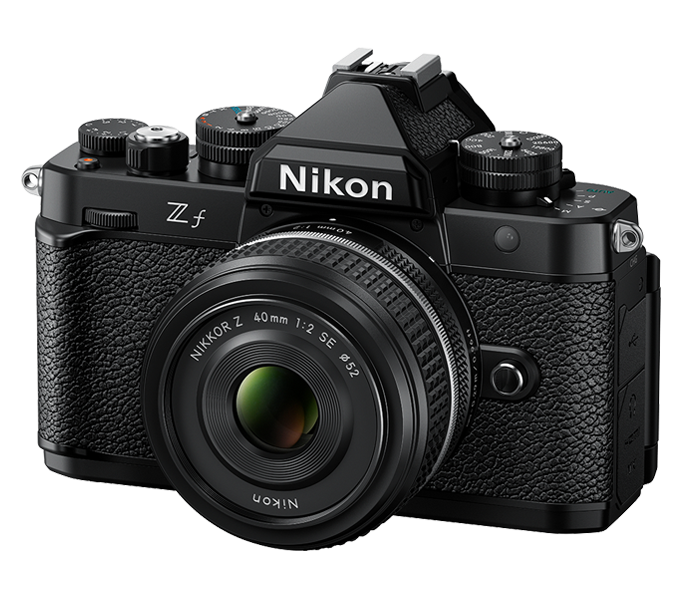
The Canon EOS R5 and Nikon Zf are two prominent full-frame mirrorless cameras that cater to both enthusiasts and professional photographers. As leading offerings from Canon and Nikon, respectively, these models are often compared for their advanced features, performance, and pricing, making them top contenders for anyone in the market for high-quality imaging capabilities. Buyers might find themselves choosing between them based on specific needs, such as autofocus performance, video capabilities, and overall ergonomics.
One of the key differentiators between the two cameras is their sensor resolution and autofocus systems. The Canon EOS R5 boasts a higher resolution sensor at 45 megapixels, which provides exceptional image detail and allows for more cropping flexibility. In contrast, the Nikon Zf, with a 25-megapixel sensor, focuses on delivering robust performance and features at a more accessible price point. Understanding these distinctions can help buyers make informed decisions based on their photography or videography requirements.
Specifications Comparison
Detailed Comparison
Image Quality
When it comes to image quality, the Canon EOS R5 stands out with its 45-megapixel full-frame sensor, which offers impressive detail even in demanding shooting conditions. Images can be captured at ISO settings ranging from 100 to 51200, expandable to 102400, enabling photographers to shoot in low-light scenarios with minimal noise. The high resolution pairs well with the camera's ability to produce stunning prints and crop images without losing detail.
In comparison, the Nikon Zf features a 25-megapixel sensor. While this resolution is lower than that of the EOS R5, it still produces excellent image quality with good dynamic range and color accuracy. The ISO range is also commendable, albeit not as extensive as the Canon's, leading to slightly more noise in very low light conditions. For most general photography needs, the Zf will suffice, but those aiming for the highest image fidelity may lean towards the R5.
Overall, if image quality is your priority, particularly in terms of resolution and low-light performance, the EOS R5 takes the lead, whereas the Zf delivers solid results at a more approachable price point for non-professional endeavors.
Autofocus System
The autofocus system in the Canon EOS R5 is one of its standout features. With 1053 autofocus points covering a wide area of the frame, it provides fast and accurate focusing, essential for sports and wildlife photography. The Dual Pixel CMOS AF technology, combined with eye detection for both humans and animals, ensures precise focus tracking, especially beneficial in dynamic shooting environments.
On the other hand, the Nikon Zf offers a robust 273 autofocus points, which, while adequate for most situations, does not quite match the breadth of the R5's system. However, the Nikon's AF system still performs reliably, with decent focus acquisition and tracking capabilities, particularly in standard shooting scenarios. It incorporates improvements in subject detection but lacks the same level of versatility found in the R5.
Therefore, for users heavily reliant on autofocus, especially for fast-moving subjects, the Canon EOS R5 is the superior choice, demonstrating that a more extensive AF system can deliver improved results for demanding photographic scenarios.
Video Capabilities
Video performance is another critical area where the Canon EOS R5 shines. It supports 4K recording at up to 120 frames per second, allowing for high-resolution slow-motion video capture. Additionally, the R5 can record in 8K, a feature that is appealing for videographers looking to future-proof their content. Furthermore, with 8 stops of in-body stabilization, it greatly enhances handheld shooting capabilities, reducing the risk of shaky footage.
Conversely, the Nikon Zf is limited to 4K at a maximum of 60 frames per second, which, while still robust for most applications, does not offer the same level of flexibility as the Canon. The 8 stops of in-body stabilization are comparable, ensuring stability in handheld shots. However, for serious filmmakers and those focused on high-frame-rate capabilities, the Zf may fall short of expectations compared to the R5's performance.
As a result, for users prioritizing video with high frame rates and resolution, the Canon EOS R5 is clearly the leader in this category, providing more advanced features tailored for modern video production.
Build & Ergonomics
The Canon EOS R5 showcases a well-considered ergonomic design, weighing in at 738g and featuring a compact size that balances sturdiness with comfortable handling. Its weather-sealed body makes it suitable for outdoor photography. Additionally, the controls are intuitive, and the 3.2" touch screen offers versatility, further enhancing the user experience.
In comparison, the Nikon Zf is slightly lighter at 710g, though it measures larger in overall dimensions, making it bulkier. Despite this, it still maintains a solid build with good ergonomics, and the user interface is also well-designed for ease of access. Nevertheless, it might not offer the same level of comfort during extended shooting sessions compared to the R5.
In terms of build quality and ergonomics, the R5 takes the edge, especially for photographers who prioritize long-duration comfort and outdoor durability.
Battery & Storage
Battery life is an essential consideration for photographers, and here the Nikon Zf has a slight advantage, rated for approximately 380 shots per charge, compared to the Canon EOS R5's 320 shots. This difference might seem minor, but for users capturing long events or on extended outdoor shoots without access to charging, the added battery longevity of the Zf could be noticed.
Both cameras support the same types of memory cards, with the Canon EOS R5 utilizing dual card slots for redundancy and increased storage options, which is particularly beneficial for professionals who often shoot high-resolution files demanding significant disk space. The Zf offers a single card slot, which might limit its appeal for high-volume shooters.
Ultimately, in terms of battery life, the Nikon Zf is slightly ahead, but when considering storage capabilities, the R5 reigns supreme due to its dual-card slot feature, making it the more versatile option for users concerned with storage management.
Value for Money
Pricing is a crucial consideration, with the Canon EOS R5 priced at $3899, positioning it as a premium option packed with advanced features that appeal to professionals and serious enthusiasts. The substantial investment can be justified by image quality, video capabilities, and overall performance.
On the other hand, the Nikon Zf, at $1999, offers a more accessible entry point into full-frame mirrorless photography. While it may lack some advanced features found in the R5, it still delivers great image quality and video performance, making it an attractive choice for enthusiasts and those new to full-frame shooting.
In terms of overall value, the Zf excels for buyers seeking a budget-friendly yet capable full-frame camera. However, for those requiring top-tier performance and willing to invest more, the R5 offers greater long-term value due to its features and capabilities. Thus, the perception of value may vary significantly depending on the user's specific needs and budget.
Our Verdict
In conclusion, while both the Canon EOS R5 and Nikon Zf offer impressive features and capabilities, the overall winner in this comparison is the Canon EOS R5. It excels in image quality, autofocus performance, and video capabilities, making it the best choice for professionals and serious enthusiasts alike. The Nikon Zf, while slightly trailing in these areas, presents a more budget-friendly option without compromising too much on performance, catering to enthusiasts and those entering the full-frame market. Ultimately, the choice depends on the buyer's specific requirements: for high-end performance and versatility, choose the R5; for excellent value and solid features, opt for the Zf.