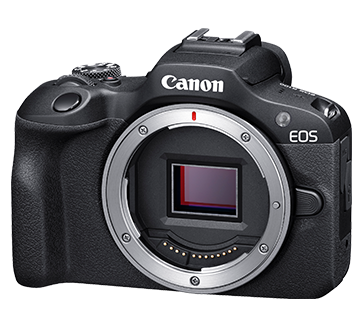
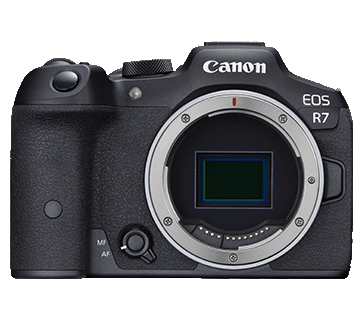
The Canon EOS R100 and Canon EOS R7 are both versatile mirrorless cameras that cater to different user needs. While the R100 is aimed at beginners and casual photographers seeking an affordable entry into the Canon EOS ecosystem, the R7 targets more advanced users, including enthusiasts and semi-professionals demanding higher performance and features. As both cameras share the Canon RF mount, potential buyers often compare them to weigh the benefits of cost-saving versus performance enhancements and durability.
Specifications Comparison
Detailed Comparison
Image Quality
The Canon EOS R100 features a 24-megapixel APS-C sensor, providing excellent image quality suitable for general photography and print work. The ISO range of 100-12800 is adequate for low-light scenarios, although it may struggle with noise at higher settings. In contrast, the EOS R7 boasts a 33-megapixel APS-C sensor, delivering higher resolution images that capture more detail. Its extended ISO range of 100-32000 allows for better low-light performance without significant noise, making it preferable for night photography and challenging lighting conditions. Both models offer good dynamic range, but the R7 benefits from better noise handling, especially in high ISO situations.
Autofocus System
The autofocus system distinguishes these two cameras significantly. The Canon EOS R100 is equipped with 143 autofocus points, offering reliable tracking and recognition for most situations. However, the more advanced R7 features 651 autofocus points, making it advantageous for fast-moving subjects and complex scenes. With superior subject tracking and Eye Detection autofocus, the R7 excels at capturing action, making it an ideal choice for sports and wildlife photographers. While both systems perform well, the R7's more sophisticated capabilities give it an edge.
Video Capabilities
When it comes to video capabilities, the Canon EOS R100 can capture Full HD (1080p) video, which is adequate for casual projects but lacking for higher-end applications. In contrast, the Canon EOS R7 supports 4K video recording at up to 30p with no crop, providing filmmakers and content creators with greater versatility and quality. The R7 also supports features like C-Log and high frame rates for slow-motion video, making it a more appealing option for those looking to produce professional-grade content. Overall, for video work, the R7 clearly outshines the R100.
Build & Ergonomics
In terms of build quality, the EOS R7 is weather-sealed, designed to withstand harsh environmental conditions, which will appeal to outdoor photographers. Its larger body size (132 x 90 x 92 mm) may provide better grip and ergonomics for prolonged use, while the R100 is lighter at 356g and more compact, making it a better option for travel and casual shooting. However, it lacks weather sealing, so care must be taken when shooting outdoors. The electronic viewfinder in both models adds versatility, but the R7's more robust build structure brings added assurance to serious users.
Battery & Storage
Battery life is another critical consideration. The Canon EOS R100 has a smaller battery capacity, with approximately 480 shots per charge, making it suitable for light use but potentially limiting during extended shooting sessions. On the other hand, the EOS R7 lasts up to 660 shots on a single charge. Additionally, both cameras use the same Canon RF mount for their lenses, making lens compatibility straightforward. However, buyers may find the R7's higher capacity appealing for demanding shooting environments.
Value for Money
The Canon EOS R100 is priced significantly lower at $480, making it one of the most affordable options in the Canon mirrorless lineup. It offers great value for entry-level photographers or those who need a compact camera without extensive features. Conversely, the Canon EOS R7, priced at $1499, is a more substantial investment that provides advanced features and superior performance. For users looking for serious photographic capabilities and professional-grade output, the R7 justifies its higher price with its extensive feature set. Therefore, the value proposition depends on the user's needs; for casual users, the R100 may represent better value, while the R7 is worth the investment for serious photographers.
Our Verdict
Overall, while the Canon EOS R100 offers excellent value for beginners and casual photographers, the Canon EOS R7 wins due to its superior image quality, autofocus performance, advanced video capabilities, and robust build quality. Enthusiasts or professionals ready to invest in a higher-end camera will find the R7 more aligned with their needs, especially for action photography or video production. Thus, the best choice depends on the user's skill level, the type of photography or videography they intend to pursue, and budget considerations.
Canon EOS R100
Canon EOS R7
Also Compare
Frequently Asked Questions
Is the Canon EOS R100 suitable for professional photography?
While the Canon EOS R100 can produce good quality images for basic photography, it lacks the advanced features and performance needed for professional work. The R7 is better suited for professionals.
How does the autofocus compare between the two models?
The Canon EOS R7 has a significantly more advanced autofocus system with 651 points compared to 143 in the R100, allowing for better tracking of fast-moving subjects.
What is the primary use case for the Canon EOS R100?
The R100 is ideal for beginners, casual photographers, and travelers who need an affordable, lightweight, and easy-to-use camera for everyday shooting.
Does the R7 have better video capabilities than the R100?
Yes, the R7 supports 4K video recording, while the R100 is limited to Full HD, making the R7 a superior choice for video content creation.
Which camera is better for low-light photography?
The Canon EOS R7 performs better in low-light conditions due to its larger sensor and higher ISO range compared to the R100.