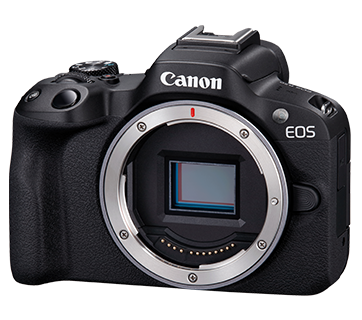
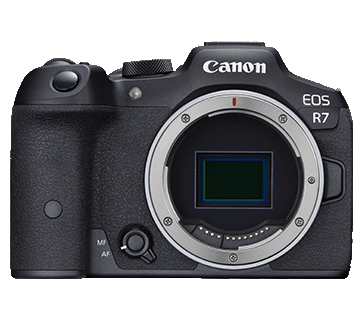
The Canon EOS R50 and Canon EOS R7 are two of Canon's exciting mirrorless cameras that appeal to different segments of photography enthusiasts. Commonly compared due to their similar APS-C sensor format and RF mount compatibility, these models cater to users who may be transitioning from DSLR to mirrorless or those looking to enhance their photographic capabilities without stepping into the full-frame territory. The R50 appeals to amateur photographers and vlogging enthusiasts with its compact size and affordability, while the R7 is designed for more serious shooters seeking advanced features and enhanced performance.
Key differentiators include sensor resolution, frame rate, in-body stabilization, and build quality. At 33 megapixels, the R7 offers greater detail capturing compared to the R50's 24 megapixels. Additionally, the R7 supports in-body stabilization, which is crucial for low light or handheld shooting. On the other hand, the R50 comes in at a significantly lower price point, making it an attractive option for budget-conscious buyers who prioritize portability over advanced features.
Specifications Comparison
Detailed Comparison
Image Quality
When it comes to image quality, the Canon EOS R7 has a clear advantage with its 33-megapixel APS-C sensor. This higher resolution allows photographers to capture finer details, which is particularly beneficial for landscape and portrait photography, where resolution is paramount. In contrast, the R50, with its 24-megapixel sensor, still delivers impressive image quality suitable for casual photography and social media use but falls short in detail when compared directly to the R7.
Both cameras share the same ISO range of 100-32000, providing adequate low-light performance. However, the R7's sensor, although slightly older, might capture more detail in the shadows at higher ISO settings and better maintain dynamic range, giving it an edge in challenging lighting conditions. The overall color science is similar across both bodies, but with the additional megapixels, the R7 can offer enhanced post-processing latitude for users who like to edit their photos extensively.
In summary, while both cameras perform well within their limits, the R7's larger megapixel count results in superior image quality, making it suitable for professional applications. Therefore, in terms of image quality, the winner is clearly the R7.
Autofocus System
The autofocus systems of both the Canon EOS R50 and R7 are impressive, featuring 651 AF points that cover a wide area of the frame. However, the R7 has features that enhance its capability further, including superior tracking performance and faster acquisition speeds. The R7 benefits from Canon's Dual Pixel CMOS AF II technology, which is known for its speedy response and accuracy, particularly when shooting moving subjects or working with shallow depths of field.
In real-world usage, the R7's autofocus prowess excels in dynamic environments such as sports or wildlife photography, where rapid subject movement is common. The R50's autofocus system, while reliable for everyday shooting and focusing on stationary subjects, may struggle a bit more in fast-paced scenarios compared to the R7.
While both cameras provide excellent focus performance, particularly for casual use, the advanced capabilities of the R7's autofocus system make it the more robust option, especially for hybrid shooters who require quick and accurate focusing in various situations. Thus, the winner in Autofocus is the R7.
Video Capabilities
Both the Canon EOS R50 and R7 offer 4K video recording at 30p, making them suitable for casual videographers and content creators. However, the R7 provides additional advantages for those who take video more seriously. In terms of video quality, while both cameras are capable of recording in 4K, the R7 supports higher bit rates and more advanced video formats, accommodating professionals looking for better post-production flexibility.
Additionally, the R7 features in-body stabilization (IBIS), giving users the ability to capture smoother footage when moving or shooting handheld, which is a significant advantage over the R50, which lacks this feature. The stability offered by the R7 is particularly valuable for videographers capturing action shots or dynamic subjects, as it reduces shake and enhances overall video quality.
While the R50 remains a viable option for those who do not require advanced video capabilities, the R7 clearly stands out with better features for serious videography. Therefore, in the realm of video capabilities, the winner is the R7.
Build & Ergonomics
The Canon EOS R50 is notably smaller and lighter, making it an excellent option for travelers or content creators who value portability. Weighing in at just 375 grams, its compactness doesn't compromise ease of handling. However, the trade-off for size is less robust weather sealing and build quality specifications compared to the R7.
Conversely, the Canon EOS R7 has a sturdier build, with weather sealing that makes it more suitable for various environmental conditions and outdoor use. It weighs 612 grams, which is still manageable for extended shooting sessions but not as convenient as the R50 for on-the-go use. The ergonomic design of the R7, with better grip and button layout for professional handling, enhances the shooting experience, especially for long shoots.
In summary, while ergonomics is subjective to user preference, the R50 excels in portability, and the R7 offers a more robust build and handling characteristics. The winner for build quality and ergonomics leans toward the R7.
Battery & Storage
The Canon EOS R7 comes equipped with a stronger battery life, rated for around 660 shots, making it more suited for extended shooting sessions compared to the R50. This increased battery life is pivotal for professionals and those who shoot in demanding conditions, where changing batteries frequently might not be feasible.
Both cameras use similar memory card formats (SD cards), allowing for compatible storage solutions. However, considering the R7's higher video capabilities, it may require faster UHS-II cards for optimal performance during high-bitrate video recording, while the R50 can function adequately with standard UHS-I cards due to its less demanding video specs. Therefore, users need to consider the investment in storage based on their intended usage.
With superior battery life and better efficiency for high-demand photography, the R7 shines in this aspect. Hence, the winner for Battery & Storage is the R7.
Value for Money
In terms of value for money, the Canon EOS R50 stands out due to its lower price point of $679, making it an accessible entry-level option for new photographers and those transitioning from compact cameras or smartphones. For casual users, the image quality and features provided by the R50 represent an excellent price-to-performance ratio.
On the other hand, the Canon EOS R7, priced at $1499, justifies its cost with its extensive feature set aimed at serious enthusiasts and professionals. While it is considerably more expensive, the R7's advanced specifications, such as higher resolution, IBIS, and superior autofocus make it a worthwhile investment for users who require enhanced capabilities.
Ultimately, while the R50 is undeniably great value at its price, the R7 delivers a strong performance for its more significant investment, focusing on quality and features that are beneficial to serious photographers. Therefore, in terms of value for money, the R50 takes the lead.
Our Verdict
Overall, while the Canon EOS R50 offers great value and is an excellent choice for budget-conscious amateurs and casual users, the Canon EOS R7 clearly emerges as the superior camera for serious photographers and videographers. It exceeds expectations with its image quality, autofocus capability, build quality, and video performance, making it well-suited for professional use. Buyers should consider their priorities: those who predominantly shoot for leisure and require portability might opt for the R50. Alternatively, those looking to invest in a camera that can adapt to a variety of demanding shooting scenarios should choose the R7.
Canon EOS R50
Canon EOS R7
Also Compare
Frequently Asked Questions
Which camera is better for beginners?
The Canon EOS R50 is a more accessible choice for beginners due to its lower price, lighter weight, and ease of use, making it ideal for those just starting in photography.
Is the autofocus system the same in both cameras?
Both cameras feature a 651-point autofocus system; however, the R7 excels with faster and more accurate focusing due to its enhanced technology.
Does the R7 have better video capabilities?
Yes, while both cameras support 4K recording, the R7 offers additional features like in-body stabilization and higher bitrate recording options, making it superior for video.
Which camera is more portable?
The Canon EOS R50 is significantly smaller and lighter, making it more portable than the R7, which is bulkier and heavier.
Is the price difference justified?
The price difference is justified as the R7 offers advanced features and better performance overall, making it a viable option for serious photographers and videographers.