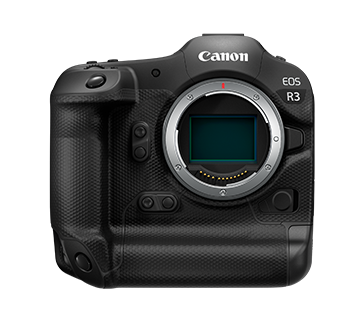
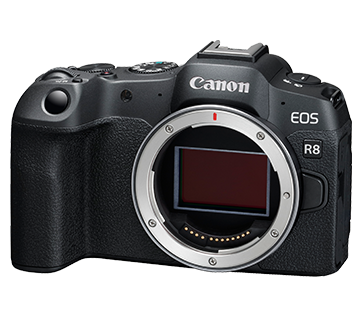
The Canon EOS R3 and EOS R8 have garnered considerable attention in the photography community due to their distinct yet compelling features, appealing to both professional photographers and enthusiasts alike. While both models share a similar full-frame sensor size and resolution, they serve different target audiences through their performance characteristics and price points. Buyers often find themselves in a dilemma between the high-end functionality of the R3 and the more budget-friendly, user-friendly R8. Key differentiators include autofocus capabilities, video performance, and overall versatility, making understanding these features essential for potential buyers.
Specifications Comparison
Detailed Comparison
Image Quality
Both the Canon EOS R3 and R8 feature a 24-megapixel full-frame sensor, ensuring high image quality, dynamic range, and low-light performance. The R3 edges out slightly with an expansive ISO range that extends from 50 to 204800, offering greater flexibility in challenging lighting conditions. In contrast, the R8 has a standard ISO range of 100 to 102400, which may limit its performance in very low light situations. That said, the differences in image quality may not be noticeable for everyday photography and a majority of users.
The R3's advanced sensor and processing technology also contribute to its superior handling of noise at higher ISO levels. This can be advantageous for photographers who demand clean images in extreme conditions, such as sports or wildlife photography. The R8, while still capable, may exhibit more noise at the upper end of its ISO range, making it better suited for well-lit environments or moderate low-light conditions.
Ultimately, the image quality of both cameras is excellent for their class; however, the R3 offers more versatility for those who regularly find themselves shooting in tricky lighting setups or require high-performance imagery to meet professional standards.
Autofocus System
The Canon EOS R3 is equipped with an impressive autofocus system, boasting 1053 autofocus points. This design enables fast and precise focusing across a wide area, particularly advantageous for fast-moving subjects in sports and wildlife photography. Its Dual Pixel CMOS AF technology ensures reliable tracking, making it a go-to choice for professionals needing accuracy.
The R8 shares the same number of autofocus points (1053) and employs similar Dual Pixel AF technology, which makes it capable of accurate focusing as well. However, the R8's autofocus performance is not as advanced as that of the R3, especially in modes like eye tracking and advanced subject recognition, where the R3 excels. This difference can significantly impact performance in high-paced situations, where every moment counts.
In summary, the R3's autofocus capabilities are tailored for speed and precision, positioning it as a leader in the autofocus domain, while the R8 provides competent performance suited for general photography and hobbyist needs.
Video Capabilities
The video capabilities of the Canon EOS R3 significantly outperform those of the R8. The R3 can record 4K video at 120 frames per second, which is ideal for smooth slow-motion capture, making it an excellent choice for videographers. Additionally, it supports 6K raw video output, which allows for maximum flexibility in post-production.
On the other hand, the R8 can record video at a maximum resolution of 4K 60p. While this is sufficient for most casual video shooting needs, it lacks the advanced features found in the R3, such as higher frame rates and raw recording capabilities. This may limit the R8's appeal to those who prioritize video performance in their creative projects.
Therefore, for professionals or serious enthusiasts focused on video work, the R3 offers the superior option, while the R8 is more than capable for casual users who do not require extensive video features.
Build & Ergonomics
The build quality of both the EOS R3 and R8 is commendable, featuring weather sealing that protects against the elements. However, the R3's robust design includes more substantial controls and is tailored for intensive use under rigorous conditions, appealing to professionals in demanding environments. Weighing in at 1015 grams, it is heavier but offers additional grip and durability.
Conversely, the R8 is significantly lighter at 461 grams and features a more compact design, making it extremely portable and easier to carry for longer periods. This lightweight build caters to travel photographers or enthusiasts looking for a camera they can easily handle on the go without sacrificing too much functionality.
While both cameras are well-designed, buyers seeking durability for heavy use may favor the R3, whereas those valuing portability may find the R8 to be an ideal match for their needs.
Battery & Storage
The Canon EOS R3 excels in battery life, offering approximately 760 shots per charge, making it suitable for extended shooting sessions. This extended battery life is critical for professionals who may not have the opportunity to recharge during an event. Additionally, the R3 supports dual memory card slots, allowing for greater storage capacity and backup options during important shoots.
In contrast, the R8 has a comparatively limited battery life and maintains flexibility with card storage through a single slot. While it may serve casual photographers well for standard usage, those planning longer sessions may find it lacks the endurance of the R3. The single card slot can also pose a risk in critical shooting scenarios, failing to provide the redundancy that can be comforting for professional use.
Overall, the R3's superior battery performance and dual card capability make it a more reliable choice for professional photographers who require dependability in their gear.
Value for Money
In terms of pricing, the Canon EOS R8 is undeniably more accessible, retailing at approximately $1499, which is attractive for budding photographers and enthusiasts seeking quality performance without breaking the bank. The R8 offers excellent value for those needing a capable full-frame camera for everyday use, basic videography, and casual photography needs.
On the other hand, the R3 comes with a premium price tag of around $5999. However, this investment reflects its advanced capabilities, offering superior autofocus, video, and build quality. For professionals or serious enthusiasts who require a high-performance camera, the R3's price can be justified by its extensive features.
Ultimately, for budget-conscious buyers or beginners, the R8 is the clear winner in terms of value for money. In contrast, the R3 is ideal for those who can and are willing to invest more for extraordinary capability and quality.
Our Verdict
Overall, the Canon EOS R3 stands out due to its superior performance across critical aspects, including autofocus, video capabilities, and durability. It is tailored for professionals who require uncompromising quality and versatility in demanding conditions. Meanwhile, the Canon EOS R8 is an attractive option for casual photographers seeking an affordable, lightweight camera capable of delivering impressive images without the need for advanced features. Buyers should choose the R3 for its advanced capabilities and reliability or opt for the R8 for budget-friendly versatility.