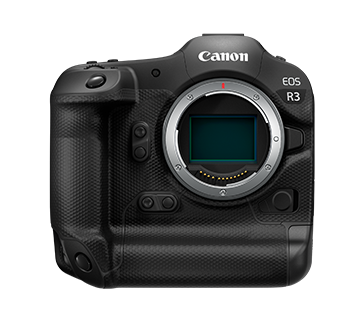
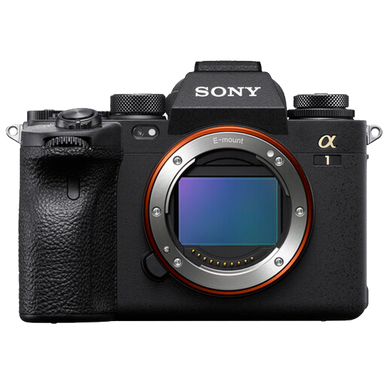
The Canon EOS R3 and Sony A1 are two of the most advanced mirrorless cameras on the market, often compared by professional photographers and enthusiasts looking for top-tier performance in various shooting scenarios. Both models were released in 2021, showcasing the latest technologies from Canon and Sony, and each is designed to meet the demanding needs of both still photography and videography. Buyers might find themselves choosing between these models based on specifications such as megapixels, autofocus capabilities, and video performance, among other factors. Key differentiators include resolution, stabilization technology, and battery life, which can significantly influence the user experience.
Specifications Comparison
Detailed Comparison
Image Quality
The Canon EOS R3 features a 24-megapixel full-frame sensor, which is well-suited for dynamic shooting scenarios, providing efficient performance in low-light situations thanks to its extended ISO range of 100-102400 (expandable to 50-204800). This lower resolution allows for faster readout speeds, which is particularly beneficial for burst shooting in sports or wildlife photography. On the other hand, the Sony A1 boasts an impressive 50 megapixels, offering exceptional detail and resolution for landscape, studio, and commercial photography. This higher pixel count also permits a greater degree of cropping without sacrificing image quality. However, its native ISO range is a bit limited in comparison, extending from 100-32000 (expandable to 50-102400). In practical applications, the R3 may excel in high-speed scenarios while the A1 shines in high-resolution needs.
Autofocus System
Canon's EOS R3 is equipped with a sophisticated autofocus system featuring 1053 autofocus points, allowing for incredibly precise focusing across a large area of the frame. The camera utilizes Dual Pixel CMOS AF technology, which provides fast and accurate focusing even in low-light conditions. Conversely, the Sony A1 features a slightly lower count of 759 autofocus points, yet it employs advanced Eye-AF technology that excels in tracking both human and animal eyes with great accuracy. While both cameras offer excellent autofocus capabilities, the advantage goes to the R3 for its number of points, which can be particularly beneficial for diverse shooting styles where adaptability is key.
Video Capabilities
Both cameras offer impressive video features, including the ability to shoot 4K at 120 frames per second. However, the advantages of each camera come down to specific user needs. The Canon EOS R3 supports 8-stop image stabilization, helping to reduce shake and enhance stability when shooting handheld. This stabilization is especially useful for dynamic video shoots. Meanwhile, the Sony A1 delivers 4K recording with a remarkable focus on detail and color fidelity. However, its stabilization is rated at 5.5 stops, which may not be as effective for all videography scenarios. If stabilization is critical for your work, the R3 may hold the upper hand, while A1 showcases unmatched detail for video work overall.
Build & Ergonomics
When assessing build quality and ergonomics, both the Canon EOS R3 and Sony A1 are constructed with weather-sealed bodies, making them robust for outdoor shooting under various conditions. The R3, weighing 1015g, is heavier compared to the 737g A1, which may affect portability during long shoots. Additionally, the R3 features a slightly larger 3.2-inch touchscreen with 4,150,000 dots, offering better visibility and flexibility in controlling settings. The A1's 3-inch screen with 1,440,000 dots, while still capable, does not match the R3's clarity. The larger grip of the R3 can also be more comfortable for extended periods of handling, while the A1's compact design can be preferred for travel. Ultimately, the choice comes down to preference for weight versus a larger display.
Battery & Storage
The Canon EOS R3 provides an impressive battery life, rated for approximately 760 shots per charge, compared to the 530 shots of the Sony A1. This longevity can make a significant difference during long photo assignments or shoots when access to charging facilities is limited. Additionally, the R3 supports CFexpress Type B cards which allow for rapid data transfer for high-resolution images and video, essential for professional workflow. Conversely, the A1 also supports CFexpress Type A and SD UHS-II cards, offering flexibility for a broader range of storage options. While both systems are fast and efficient, Canon's battery life gives it an edge for users who prioritize longevity and extended shooting sessions.
Value for Money
Pricing for the EOS R3 is at $5999, making it slightly more affordable than the Sony A1, which is priced at $6500. Although the A1 offers a higher megapixel count and impressive video quality, the price difference may not justify the additional features for everyone. The R3 includes advanced autofocus, superior in-body stabilization, and longer battery life, which can be more appealing for those who are looking for all-around performance in challenging shooting conditions. As both cameras cater to serious photographers, the decision may ultimately depend on specific needs, such as resolution versus versatility and handling.
Our Verdict
Overall, the Canon EOS R3 emerges as the winner between these two powerhouse models due to its superior autofocus system, longer battery life, and better stabilization technology, making it more suitable for dynamic shooting scenarios. The Sony A1, while offering higher resolution, excels in image detail and might cater better to studio environments or specific photography styles that prioritize megapixels. Depending on individual preferences-such as weight, price point, and shooting style-each camera has distinct advantages, but the R3's well-rounded performance provides a compelling case for its selection as the top choice.
Canon EOS R3
Sony A1
Also Compare
Frequently Asked Questions
Is the Canon EOS R3 better for sports photography?
Yes, the Canon EOS R3 offers faster autofocus with more points, along with superior stabilization, making it particularly effective for fast-paced sports photography.
Which camera is more suitable for landscape photography?
The Sony A1, with its 50 megapixels, provides higher resolution images which are advantageous for landscape photography, allowing for detailed prints and crop flexibility.
How do the video capabilities compare?
Both cameras can shoot 4K at 120p, but the R3 offers better in-body stabilization, providing smoother footage, especially when shooting handheld.
Which camera has better battery life?
The Canon EOS R3 has approximately 760 shots of battery life, making it significantly better for long shooting sessions compared to the A1's 530 shots.
Are both cameras weather-sealed?
Yes, both the Canon EOS R3 and Sony A1 are weather-sealed, allowing for usage in various environmental conditions.
How do the two cameras handle low-light conditions?
The R3's lower megapixel count allows for faster sensor readout, making it perform better in low-light scenarios than the A1, despite the A1's higher expandable ISO range.