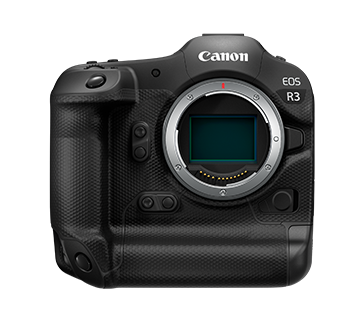

The Canon EOS R3 and the Sony ZV-E1 are two notable cameras that cater to different segments of the photography and videography market, making them commonly compared. The EOS R3 targets professional photographers and hybrid shooters seeking high-performance capabilities, while the ZV-E1 is designed primarily for vloggers and content creators who prioritize portability and usability for video. Buyers who are deciding between these two models will likely weigh factors such as image quality, autofocus performance, video capabilities, and overall value for their respective needs.
Specifications Comparison
Detailed Comparison
Image Quality
When it comes to image quality, the Canon EOS R3 holds a notable advantage with its 24-megapixel full-frame sensor compared to the ZV-E1's 12-megapixel sensor. The higher resolution of the R3 allows for more detail in images, especially important for large prints and high-quality cropping. Additionally, the expanded ISO range of the EOS R3 (50-204800) provides greater flexibility in low-light conditions, although the ZV-E1 does offer an impressive range (40-409600) with its 12-megapixel sensor.
On the other hand, while the ZV-E1 has a lower megapixel count, it can still produce excellent image quality suitable for most video needs and casual photography. The reduced file sizes may also be an advantage for vloggers focusing on fast workflows and less storage consumption. However, for photographers looking to maximize image quality, the detail and higher dynamic range from the R3's more advanced sensor make it the superior choice in this comparison.
Autofocus System
The autofocus capabilities of both cameras are impressive but cater to different use cases. The Canon EOS R3 features a significantly higher number of autofocus points (1053) compared to the Sony ZV-E1's 759. This extensive point coverage ensures faster and more accurate focus, particularly beneficial in dynamic shooting environments like sports or wildlife photography.
Conversely, the Sony ZV-E1 employs advanced Real-Time Eye AF technology tailored for vlogging and portraiture. While fewer focus points may mean slightly less versatility in extreme situations, the ZV-E1 still excels in reliably tracking subjects. The R3's superior autofocus system provides more versatility for various photography styles, making it a stronger contender overall in this aspect.
Video Capabilities
In terms of video capabilities, the Canon EOS R3 supports 4K video at up to 120 frames per second, allowing creators to achieve slow-motion effects with high resolution. This feature is particularly valuable for sports and action videography. The ZV-E1 records 4K at a maximum of 60 frames per second, which is suitable for most vlogging applications and lower-frame-rate projects.
Moreover, the R3's video capabilities benefit from its advanced heat management system, allowing longer recording times without overheating. Despite lacking a built-in electronic viewfinder, the ZV-E1 does include features like product showcase mode that is particularly appealing for content creators. Overall, the EOS R3's superior video specs and performance make it better suited for professional filmmakers.
Build & Ergonomics
When it comes to build quality and ergonomics, the Canon EOS R3 is a robust camera designed for professional use, featuring weather sealing and a larger, more ergonomic grip. Its dimensions (150 x 143 x 87 mm) and weight (1015 g) reflect a solid construction that can withstand challenging shooting conditions. The R3 also boasts a high-resolution electronic viewfinder, offering an immersive shooting experience suitable for professionals.
In contrast, the Sony ZV-E1's lighter design (483 g) and compact dimensions (121 x 72 x 54 mm) are tailored for content creators who might prioritize portability over the more rugged build. Its lack of a viewfinder might be a downside for some photographers, but for vlogging, the lightweight and user-friendly design enhances maneuverability. For professional applications requiring durability, the R3 is the clear winner.
Battery & Storage
Battery life is crucial for both still photography and videography. The Canon EOS R3 offers a longer battery life, rated at approximately 760 shots per charge, which is advantageous for extended shooting sessions. This is particularly beneficial for professionals working in the field without easy access to charging equipment.
The ZV-E1 has a slightly lower battery life, lasting around 570 shots, which may be sufficient for casual use but could prove limiting during longer shoots. Both cameras support high-capacity storage formats, but the R3's efficient file handling and larger storage options, along with lengthy battery life, make it a better choice for heavy users.
Value for Money
The Canon EOS R3 comes with a higher price tag of $5999, positioning it towards professionals who demand high-end performance and are willing to invest significantly for capabilities such as faster autofocus, superior image quality, and extensive video options. It's perfect for serious photographers and videographers needing versatility and reliability.
In contrast, the Sony ZV-E1, retailing at $2200, provides exceptional value for bloggers and content creators looking for a capable yet budget-friendly option. While it doesn't offer the premium specs of the R3, the ZV-E1 excels in usability and portability, meeting the needs of casual and entry-level users. In terms of value, the R3 delivers robust professional features, but for casual users, the ZV-E1 represents better bang for the buck.
Our Verdict
Overall, the Canon EOS R3 emerges as the winner in this comparison, primarily due to its superior image quality, autofocus system, video capabilities, and build quality. While it comes with a higher price tag, the features justify the investment for professional photographers and videographers looking for a high-performance camera. The Sony ZV-E1, however, is an excellent choice for vloggers and content creators who prioritize portability and ease of use at a more accessible price. Ultimately, the choice between the two will depend on the buyer's specific needs and level of investment willing to be made.
Canon EOS R3
Sony ZV-E1
Also Compare
Frequently Asked Questions
Which camera is better for professional photography?
The Canon EOS R3 is better suited for professional photography due to its higher resolution, superior autofocus system, and advanced video capabilities.
Is the Sony ZV-E1 good for beginners?
Yes, the Sony ZV-E1 is designed with usability in mind, making it an excellent choice for beginners and vloggers looking for an affordable, user-friendly camera.
How does the video quality compare between the two cameras?
The Canon EOS R3 outperforms the Sony ZV-E1 in video quality, supporting 4K at 120p compared to the ZV-E1's 4K at 60p.
What is the weight difference between the two cameras?
The Canon EOS R3 weighs 1015g, while the Sony ZV-E1 is significantly lighter at 483g, making the ZV-E1 more portable.
Which camera offers better low-light performance?
While both cameras perform well in low-light conditions, the Canon EOS R3's expanded ISO range offers better flexibility for shooting in challenging lighting.