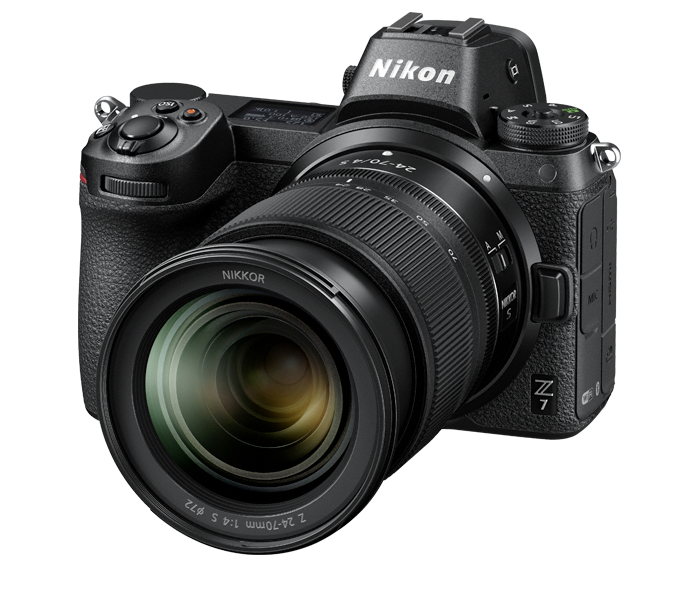

The Nikon Z7 and Sony ZV-E1 are two full-frame cameras that cater to distinct yet overlapping audiences-photographers and videographers alike. While both cameras feature advanced imaging technologies and are constructed for heavy use, they differ significantly in specifications, performance, and intended applications. The Z7, which dates back to 2018, offers a high-resolution sensor ideal for landscape and portrait photography. On the other hand, the ZV-E1, released in 2023, targets content creators with its features geared towards vlogging and video production, including enhanced frame rates and autofocus capabilities. Buyers looking for high-quality still images may lean towards the Z7, while those prioritizing video performance might find the ZV-E1 more fitting for their needs.
Specifications Comparison
Detailed Comparison
Image Quality
When it comes to image quality, the Nikon Z7 has a distinct advantage with its 46-megapixel sensor compared to the ZV-E1's 12-megapixel sensor. The higher resolution of the Z7 allows for incredibly detailed images, making it a preferred choice for landscape and studio photography. The larger pixel size in the Z7 also contributes to better low-light performance, as its ISO range of 64-25600 (expandable to 32-102400) allows for cleaner images in darker conditions. In contrast, while the ZV-E1 offers a useful ISO range of 80-102400 (expandable to 40-409600), its lower megapixel count can result in less detail, especially when cropping or printing large photos. Additionally, the Z7 features a weather-sealed body that enhances its use in various environmental conditions, further supporting its role in photography. Therefore, the Z7 is likely to produce superior image quality for stills, while the ZV-E1's lower resolution may suffice for general use and video work.
Autofocus System
Autofocus systems have evolved rapidly in recent years, and the Sony ZV-E1 showcases impressive advancements with its 759 autofocus points, as compared to the Nikon Z7's 493 points. The ZV-E1's fast and reliable hybrid autofocus system is optimized for video and live subjects, making it particularly advantageous for content creators who require responsive tracking of moving subjects, such as in vlogging scenarios. Moreover, the addition of advanced face and eye detection features in the ZV-E1 significantly enhances its usability for video recording. In contrast, while the Z7 is certainly capable in its own right and offers good autofocus for still photography, it may not match the real-time performance needed for dynamic videography. Hence, for users focusing primarily on video production, the ZV-E1's superior autofocus system makes it a clear choice.
Video Capabilities
The video recording capabilities further distinguish these two cameras, as the Sony ZV-E1 shines with 4K recording up to 60p, making it more suitable for high-frame-rate video projects. This feature enables a smoother, more fluid motion portrayal, which is critical for dynamic video footage often found in vlogs and promotional content. On the other hand, the Nikon Z7 is limited to 4K at 30p, which restricts the motion capture options for more cinematic footage. Additionally, the ZV-E1 benefits from real-time HDR monitoring and advanced video features tailored specifically for content creators, such as presets for social media. While the Z7 offers good video quality, it is overshadowed by the ZV-E1's higher frame rates and specialized video support, making it a better option for serious filmmakers and vloggers.
Build & Ergonomics
The build quality and ergonomics of both cameras are commendable, yet they cater to different preferences. The Nikon Z7, weighing 675g, features a sturdy design with a significant grip that many photographers appreciate during extended shooting sessions. Its dimensions allow for a robust feel, while the fully weather-sealed body ensures durability in adverse conditions. On the other hand, the Sony ZV-E1, being lighter at 483g with a more compact design, is more portable and ideal for users who prioritize mobility and ease of use, especially when filming vlogs or traveling. However, the ZV-E1 does not include a viewfinder, which may be a drawback for users who prefer composing shots visually rather than on the display screen. Both cameras are designed for different user experiences, and this section may boil down to personal preference regarding size and usability.
Battery & Storage
Battery life is another consideration, with the Sony ZV-E1 performing better in this regard, offering about 570 shots per charge versus the Nikon Z7's 330 shots. This is particularly advantageous for video creators who do not want to frequently change batteries during long shoots. Both cameras support similar storage types, utilizing SD cards; however, the Z7's higher resolution files will consume storage more rapidly than the ZV-E1's. Still, with 4K video, both will require ample storage, but the ZV-E1's efficiency becomes pronounced in long recording sessions, whether for video or photos. Thus, when evaluating batteries, the ZV-E1 stands out as the better option for demanding schedules where changing batteries could disrupt workflow.
Value for Money
When considering value for money, the Nikon Z7 is priced at $3399, while the Sony ZV-E1 is significantly more affordable at $2200. The higher price of the Z7 can be justified by its superior image quality, build, and performance in still photography. However, potential buyers should consider their specific needs; if video performance and portability are prioritized, the ZV-E1 offers exceptional features at a lower price point. Given that the ZV-E1 is optimized for vloggers with its video features, including a flip-out screen and excellent autofocus, it presents a compelling case for value in the realm of video creation. Ultimately, it depends on the buyer's needs for either high-resolution photography or high-performance video.
Our Verdict
Overall, the Sony ZV-E1 takes the crown with a focus on video and vlogging capabilities suited for contemporary content creation. While the Nikon Z7 excels in image quality and traditional photography, the ZV-E1's advanced autofocus, superior video performance, and better battery life make it a more versatile choice for today's creators. Buyers who primarily capture stills in high resolution should still consider the Z7 for its exceptional image quality and resilience, but for those invested in the evolving landscape of video production, the ZV-E1 presents a stronger overall value proposition.
Nikon Z7
Sony ZV-E1
Also Compare
Frequently Asked Questions
Which camera is better for portrait photography?
The Nikon Z7 is better for portrait photography due to its higher resolution and greater detail, yielding stunning results that are highly sought after in this genre.
Can the Sony ZV-E1 shoot high-frame-rate videos?
Yes, the Sony ZV-E1 can shoot 4K videos at up to 60 frames per second, making it suitable for high-frame-rate video requirements.
Is the Nikon Z7 good for video?
While the Nikon Z7 can shoot 4K video at 30p, it lacks some of the advanced features found in the ZV-E1, making it less ideal for serious video work.
Which camera is lighter and more portable?
The Sony ZV-E1 is lighter and more compact, making it a more portable option, ideal for traveling and on-the-go video creation.
What are the key differences in autofocus capabilities?
The Sony ZV-E1 features 759 autofocus points for precise tracking and subject detection, while the Nikon Z7 has 493 points, making the ZV-E1 superior for dynamic subjects.