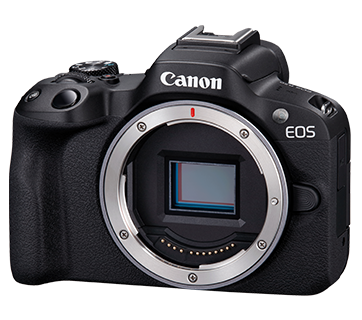
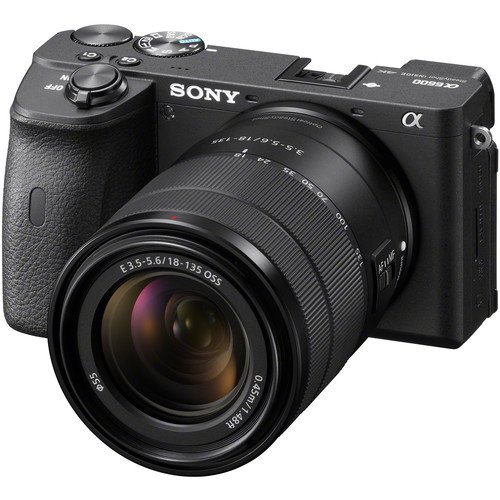
The Canon EOS R50 and Sony A6600 are two highly regarded mirrorless cameras that cater to enthusiasts and semi-professionals looking for versatile, high-performance options. They are often compared because they both feature APS-C sensors, 24 megapixels resolution, and 4K video capabilities. Buyers may be choosing between them based on factors such as budget, intended use, and specific feature requirements like autofocus performance, battery life, and build quality. The key differentiators include autofocus systems, stabilization features, and the overall value provided by each camera.
Specifications Comparison
Detailed Comparison
Image Quality
Both the Canon EOS R50 and Sony A6600 offer excellent image quality thanks to their 24-megapixel APS-C sensors. However, the Canon R50 boasts a slightly smaller sensor size compared to the A6600, which may affect depth of field and high-ISO performance under certain conditions. The ISO range for both models extends to 32,000, which caters well to low-light scenarios. The A6600 additionally supports an expandable ISO up to 102,400, giving it a distinct advantage in extreme low-light situations. Furthermore, the Canon R50's more recent launch year may imply potential advancements in its image processing algorithms that could affect image quality overall, despite having the same megapixel count. In practical usage, both cameras will deliver sharp and vibrant images suitable for most applications.
Autofocus System
The autofocus capabilities of the Canon EOS R50 and Sony A6600 are impressive, but the R50 takes the lead with a significantly higher count of 651 autofocus points compared to the A6600's 425 points. This allows for greater coverage and more precise focusing across the frame. The R50 also benefits from Canon's Dual Pixel autofocus technology, acclaimed for its smooth and responsive performance in both stills and video. In contrast, while the A6600 also has reliable autofocus with fast and accurate tracking, especially for moving subjects, it can't quite match the R50's sheer number of focus points. Overall, the R50's autofocus system may be better suited for fast-paced shooting environments, while the A6600's system remains highly capable but slightly less robust.
Video Capabilities
When it comes to video recording, both cameras support 4K at 30 frames per second, which is suitable for most videographers. However, the Sony A6600 features in-body sensor-shift stabilization, which can significantly help in reducing shake during handheld videography, a major plus for video creators who often shoot without a tripod. The EOS R50, lacking in-body stabilization, may require the use of stabilized lenses or additional gear to ensure smooth footage. Both cameras will satisfy videographers about quality, but the A6600's stabilization technology clearly gives it an edge for dynamic filming scenarios. Moreover, the R50's more modern processing technology might offer slight advantages in terms of overall usability and features like digital frame cropping.
Build & Ergonomics
In terms of build quality, the Sony A6600 comes with weather sealing, making it better suited for outdoor and rugged shooting conditions. The dimensions of the A6600 are slightly larger, and it weighs more at 503g compared to the R50's 375g. While the A6600 is designed for a sturdier grip and offers extended comfort for long shooting sessions, the R50 is more compact and lightweight, ideal for travel and portability. The availability of an electronic viewfinder on both models ensures accurate composition, but the R50's advantage lies in its more contemporary design aesthetics. Ultimately, the choice between build quality and portability will depend on the user's preferences and shooting conditions.
Battery & Storage
Battery performance is another critical factor for many photographers and videographers. The Sony A6600 excels with an impressive battery life of up to 810 shots, significantly outperforming the Canon R50, which does not have specified lasting power indicated in terms of shots per charge. For extended shooting sessions, the additional battery life of the A6600 can be a crucial advantage. In terms of storage, both cameras use SD cards without major differences affecting day-to-day usage. However, considering battery longevity in tandem with workflow efficiency, the A6600 again presents a compelling benefit.
Value for Money
Pricing is an essential aspect when comparing these two models. The Canon EOS R50 is priced at approximately $679, making it an attractive option for those entering the mirrorless market or looking for a high-quality system within a reasonable budget. On the other hand, the Sony A6600 commands a significantly higher price at around $1400, reflecting its advanced features such as in-body stabilization and weather sealing. While the A6600 may justify its price for professionals needing those advanced features, the R50 represents a great value for enthusiasts and casual shooters who may not need the added complexities and robustness offered by the A6600. Thus, for those on a tighter budget, the Canon could be the better choice without sacrificing image quality.
Our Verdict
Overall, the Canon EOS R50 emerges as the winner due to its remarkable value for money, superior autofocus system, and impressive image quality. It is an ideal choice for casual photographers and enthusiasts who prioritize portability and advanced focusing capabilities. However, the Sony A6600 offers undeniable advantages in stability, build quality, and battery life, making it a strong contender for professionals and serious videographers willing to invest more for enhanced performance. Each camera excels in specific scenarios, and buyers should choose based on their individual needs and shooting styles.
Canon EOS R50
Sony A6600
Also Compare
Frequently Asked Questions
Which camera has better autofocus performance?
The Canon EOS R50 has a superior autofocus system with 651 points compared to the Sony A6600's 425 points, making it better for tracking moving subjects and focusing in varied conditions.
What are the video capabilities of each camera?
Both the EOS R50 and A6600 can record 4K video at 30fps, but the A6600 offers in-body stabilization, providing smoother video output especially in dynamic shooting scenarios.
Is one camera better for low-light photography?
While both cameras have an ISO range of 100-32,000, the A6600 can be expanded to 102,400, giving it an edge in extreme low-light conditions.
Which camera is more portable?
The Canon EOS R50 is lighter and slightly smaller, making it a better choice for those who need a portable camera for travel and everyday photography.
Which camera offers better value for its price?
The Canon EOS R50, priced at $679, provides excellent value for beginners and enthusiasts, while the Sony A6600 at $1400 might be more justified for professional use.