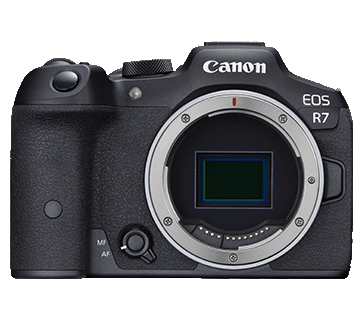
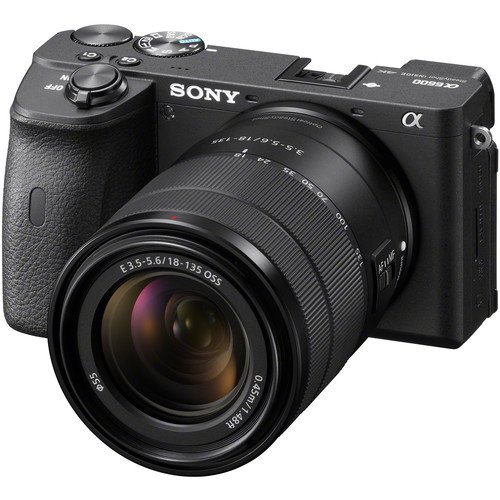
The Canon EOS R7 and the Sony A6600 are two prominent contenders in the APS-C mirrorless camera market, often compared by photographers and videographers looking for a versatile yet compact camera option. Both cameras offer advanced features, making them suitable for enthusiasts and professionals alike. The choice between these two models often boils down to specific needs-while the R7 excels in resolution and autofocus performance, the A6600 provides an established balance of features with longer battery life and a lower price point.
Key differentiators include sensor performance, autofocus capabilities, video features, and overall ergonomics, all of which cater to different kinds of photography. Potential buyers must consider their shooting style, be it for action photography, vlogging, or travel, in order to make an informed choice between these two capable systems.
Specifications Comparison
Detailed Comparison
Image Quality
The Canon EOS R7 boasts a larger megapixel count of 33 MP, allowing for higher resolution images compared to the Sony A6600's 24 MP. This increase in resolution can be especially beneficial for landscape photographers and those who require significant cropping flexibility. Additionally, the R7's APS-C sensor, while slightly smaller in dimensions, generally produces finer detail at lower ISO settings, making it preferable for high-quality prints.
On the other hand, the Sony A6600 offers highly commendable image quality that holds up remarkably well up to its maximum ISO of 32,000, expandable to 102,400. This flexibility gives the A6600 an edge in low-light situations, as many users find its noise control more manageable at higher ISO levels. Its dynamic range is also widely praised, rivaling that of some full-frame cameras.
In controlled settings, the R7 may exhibit greater detail in well-lit environments, while the A6600 may surprise users with its low-light performance. Thus, while both cameras are capable, photography needs may dictate preference. In terms of image quality, considering these nuances leads to a nuanced comparison.
Autofocus System
The Canon EOS R7 takes the lead with an impressive 651 autofocus points that cover a broader area of the frame compared to Sony A6600's 425 points. This extensive coverage aids in tracking subjects across various activities, making it a strong candidate for fast-paced photography, such as sports or wildlife.
However, the A6600 employs Sony's highly regarded Fast Hybrid AF system, which benefits from real-time Eye AF for both humans and animals, delivering impressive accuracy and speed in various scenarios. This feature, combined with its fast processing capabilities, allows for exceptional performance focusing on moving subjects, especially in video captures.
While the EOS R7 clearly possesses a greater number of focus points, the real-world performance may closely match with A6600's more intelligent focus tracking in specific situations. Thus, users may find strong results on both ends but may lean toward one based on the specific requirements of their shooting needs.
Video Capabilities
Both the Canon EOS R7 and the Sony A6600 support 4K video recording at 30p, which is quite crucial for video-oriented users. However, the R7 shines further with its internal stabilization system that provides up to 6 stops of stabilization, immensely benefiting handheld video shooting by reducing shake and jerks.
In contrast, the A6600 relies on sensor-shift stabilization, which, while effective, may not provide the same level of compensation as the R7 during intense movement. Additionally, the R7 captures a wider range of supported codecs for video footage, which could appeal to users looking for flexibility during post-production.
In terms of capabilities, both cameras deliver high-quality 4K footage, but the additional stabilization features available in the R7 caters particularly well to videographers. Users focused solely on video may prefer the R7 for its added stabilization, while those who need wider usability may find the A6600 sufficient.
Build & Ergonomics
Both cameras are weather-sealed, which is a significant advantage for outdoor photographers. However, in terms of size and weight, the Sony A6600 is slightly more compact and lighter at 503g compared to Canon's 612g, making it an ideal option for travel or extended shooting sessions where weight is a concern.
Build quality is commendable in both cases, with both cameras offering a robust feel. The R7's slightly larger grip may provide a more comfortable experience during prolonged usage, while the A6600's smaller body allows for easier one-handed handling.
Additionally, both cameras feature electronic viewfinders and 3-inch screens, but the A6600's screen has a higher pixel density (921,600 dots) compared to the Canon's. This difference might aid in composing images or reviewing footage with additional clarity.
Battery & Storage
The Sony A6600 edges out in battery life, providing approximately 810 shots per charge, compared to the Canon EOS R7's 660 shots. This distinction can be vital for photographers or videographers working on location without immediate access to additional power options.
However, both models accept SD storage cards, allowing a standard yet reliable way of managing storage needs for both images and videos. Although the A6600's additional battery life could prove advantageous, users should consider typical shooting scenarios when prioritizing this aspect.
For those who frequently shoot long events or travel, the A6600's longer battery life brings added convenience, despite both cameras being capable of handling standard day-to-day shooting effectively.
Value for Money
In terms of price, the Canon EOS R7 is priced at $1499, slightly higher than the Sony A6600 at $1400. Buyers will have to consider whether the additional features provided by the R7 justify the extra cost, factoring in the more advanced autofocus system, higher resolution, and enhanced video capabilities.
On the flip side, for users on a budget or those seeking an entry point into the APS-C mirrorless market, the A6600 gives remarkable value with its set of features, including real-time eye autofocus and good battery performance. Furthermore, the well-established ecosystem and lens options from Sony also contribute to the camera's appeal for both novice and experienced users.
Ultimately, value may be subjective depending on needs; those prioritizing resolution and specific features might lean towards the R7, while those looking for functionality and price efficiency might find the A6600 to be the better choice.
Our Verdict
Overall, the Canon EOS R7 comes out as the preferable option, primarily due to its superior resolution, advanced autofocus capabilities, and video features. It appeals to photographers who require high image quality and innovation in shooting techniques. However, the Sony A6600 is a formidable contender, especially for users valuing portability and battery life, making it great for everyday use or longer shooting sessions. Buyers should weigh their priorities in terms of weight, shooting style, and budget before making their final decision.
Canon EOS R7
Sony A6600
Also Compare
Frequently Asked Questions
Which camera has better autofocus performance?
The Canon EOS R7 features 651 autofocus points, outshining the A6600's 425 points, making it better suited for fast-paced photography. However, the A6600 has impressive real-time tracking features which can be advantageous in certain scenarios.
Is the image quality significantly different?
The R7 provides 33 MP images compared to the A6600's 24 MP, leading to sharper detail in well-lit conditions. The A6600 performs slightly better in low-light situations due to its noise management.
How does video performance compare?
Both cameras offer 4K video recording at 30p, but the R7 excels in stabilization features, making it a better choice for videographers.
Which camera is better for travel?
The Sony A6600 is lighter and more compact, making it more travel-friendly. It also offers longer battery life, which can be beneficial on extended trips.
Is weather sealing important?
Yes, both models include weather sealing, making them suitable for outdoor photography in various weather conditions.