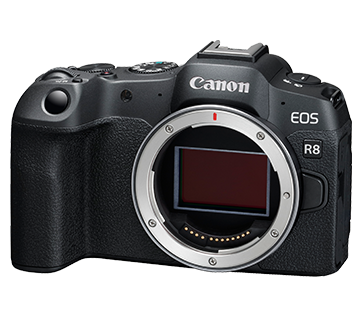
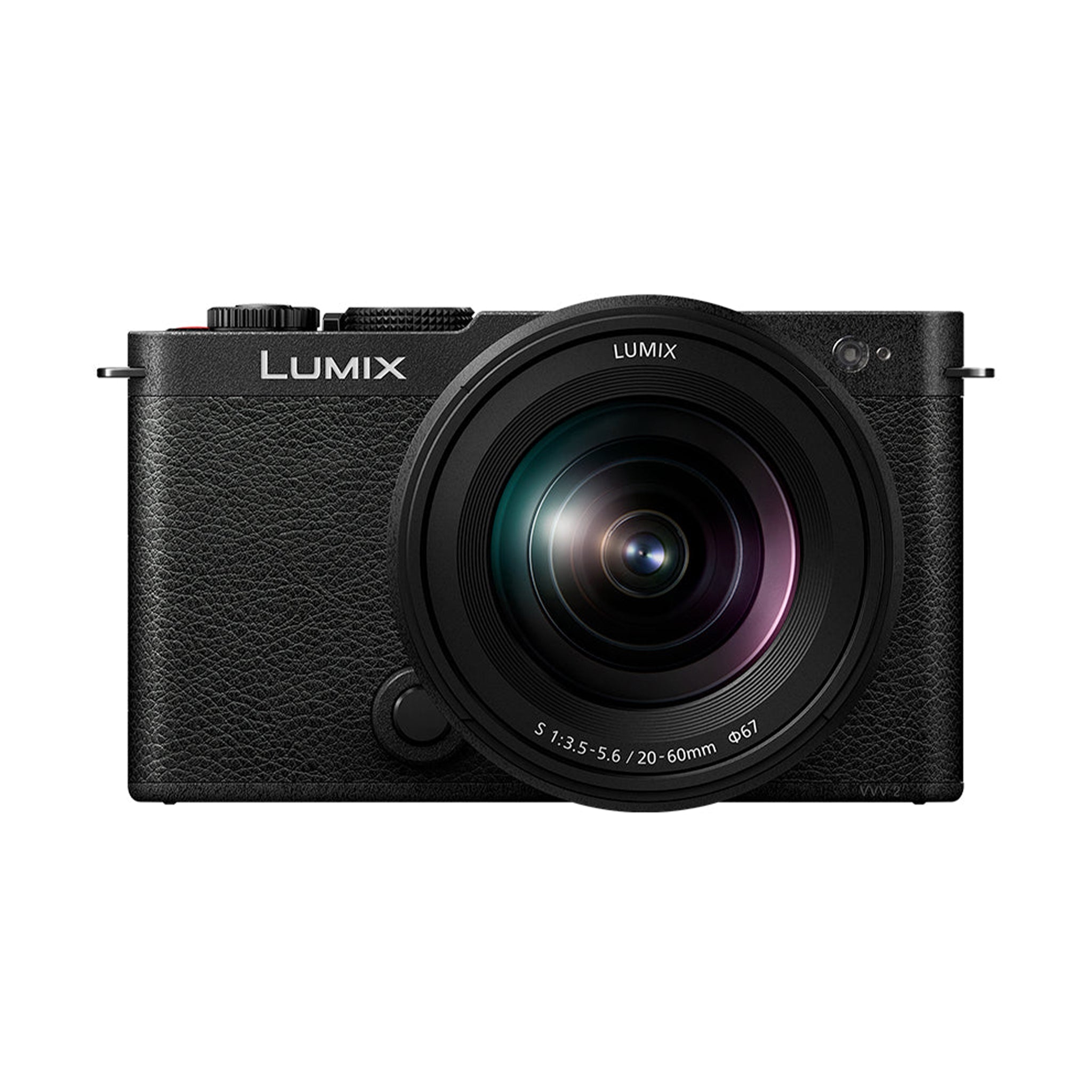
The Canon EOS R8 and Panasonic S9 are two cameras that attract the attention of both enthusiasts and professionals alike due to their advanced settings and capabilities. Canon's reputation for strong color science and user-friendly interfaces contrasts with Panasonic's renowned video performance and stabilization features. Buyers who are contemplating between these two models often look for a strong hybrid camera that can cater to both photography and videography needs, making a thorough comparison necessary. Key differentiators include video capabilities, build quality, and stability features, which can significantly influence the ultimate decision of which camera to purchase.
Specifications Comparison
Detailed Comparison
Image Quality
Both the Canon EOS R8 and Panasonic S9 feature a 24-megapixel full-frame sensor which delivers impressive image quality, producing detailed and vibrant photos that can satisfy the demands of most photographers. However, the Canon EOS R8 utilizes Canon's image processing technology which is known for its excellent color rendition and dynamic range, making it a strong contender for those who prioritize still photography. The R8's ISO range of 100-102400 allows for excellent low-light performance, slightly edging out the S9 for shooting in darker environments.
On the other hand, the Panasonic S9, with a sensor size of 35.6mm x 23.8mm, presents comparable results but may have a slight advantage in dynamic range due to its advanced processing algorithms. However, both cameras produce great images, and the difference may be negligible for casual users. For professionals requiring global shutter capabilities or specific color grading options, the enhancement in image processing might sway them towards the R8.
Ultimately, while both cameras excel in image quality, the Canon EOS R8 tends to be favored for its color science and versatility in various shooting conditions, especially when utilizing its wider ISO range.
Autofocus System
The Canon EOS R8 boasts an extensive autofocus system featuring 1053 autofocus points, offering efficient tracking and fast acquisition, especially useful for shooting moving subjects. This capability is a significant advantage for wildlife or sports photography, where capturing fleeting moments is crucial. Canon's Dual Pixel AF technology is also regarded as one of the best in the industry, ensuring that subjects remain in focus even during sudden movements.
In contrast, the Panasonic S9, while also equipped with an effective autofocus system, does not disclose the number of autofocus points. Nevertheless, Panasonic cameras are typically known for their reliable performance under various conditions. However, concerning speed and versatility, especially in dynamic environments, the autofocus system on the R8 is likely to edge out the S9. The additional points and Canon's advanced technology provide more options for tracking and capturing subjects consistently.
In summary, for those who prioritize fast and reliable autofocus, particularly in active settings, the Canon EOS R8 is the clear winner in this category.
Video Capabilities
The Panasonic S9 is designed with videography in mind, boasting impressive video resolutions, including the ability to shoot 5.9K, UHD 4K, DCI 4K, and 1080p. This broad range of options makes it an ideal choice for filmmakers looking for high-quality video output and flexibility. With its 5-axis image stabilization, the S9 also provides smooth footage, making it easier for users to shoot handheld videos without excessive vibration or shake.
In comparison, the Canon EOS R8 supports 4K video recording at up to 60p. While this is a competitive offering for many users, it does not match the more extensive capabilities of the S9. The lack of in-body stabilization in the R8 might also limit its usability for handheld shooting unless external gimbals or stabilization methods are employed. While the R8's video output is crisp, it may not fulfill the needs of those seeking the highest possible resolution for professional videography.
Consequently, the Panasonic S9 takes the lead in this category for those focused on video content, given its superior resolution options and stabilization features.
Build & Ergonomics
The Canon EOS R8 offers a robust build quality, featuring weather sealing which makes it suitable for outdoor photography. Weighing in at 461 grams, it is relatively lightweight, especially for a full-frame camera, and is compact at 133 x 86 x 70 mm. This makes the R8 easy to carry for long shooting sessions.
On the other hand, the Panasonic S9 weighs slightly more at 486 grams and is not as compact, measuring 126 x 73.9 x 46.7 mm. While it may have its advantages in ergonomics and design, it lacks weather sealing. However, Panasonic traditionally incorporates a user-friendly layout which many photographers find intuitive for extended use. The S9's slightly deeper grip can also enhance comfort when handling the camera.
Overall, while both cameras have their strengths and weaknesses in build and ergonomics, the Canon EOS R8's weather-sealed design and lighter weight give it an edge for photographers who prioritize durability and portability.
Battery & Storage
Both cameras use different approaches when it comes to battery life and storage. The Canon EOS R8 supports a variety of storage options, including SD cards, ensuring versatility for users who may prefer different types of memory solutions. However, detailed battery life specifications are often influenced by usage circumstances and can vary widely.
Conversely, Panasonic generally equips its cameras with solid battery performance, although specific details about the S9 are yet to be fully disclosed as of its launch. Both camera systems are efficient, and users may find that in practical use, the differences between the two in battery life are less impactful than one might assume.
In this category, while both cameras are expected to perform adequately, potential users might not find a definitive winner without more specific battery life metrics from the S9. Until further information becomes available, this remains a tie considering the balance in performance expectations.
Value for Money
The Canon EOS R8 is priced at 1499 USD, providing a strong hybrid camera option that delivers solid performance for both still photography and videography. Its features such as a full-frame sensor, excellent autofocus, and weather sealing make it a worthy investment for many users, especially given its release in 2023.
On the other hand, while the Panasonic S9 has its strengths, being released in 2024 might place it at a higher price point, although exact pricing isn't provided. Traditionally, Panasonic cameras are recognized for offering value, especially for video-centric users, and this might appeal specifically to those needing high-resolution capabilities.
In determining value for money, the Canon EOS R8 offers a compelling option with its price, features, and user-friendliness, making it slightly more attractive for photographers who seek versatility without breaking the bank. Therefore, in terms of value for money relative to their respective release years, the R8 is positioned as the better choice.
Our Verdict
In conclusion, the Canon EOS R8 emerges as the overall winner in this comparison, primarily due to its superior image quality, autofocus system, build quality, and value for money. While the Panasonic S9 shines in terms of video capabilities, the R8 remains the better option for photographers who want a reliable, all-around performance camera. Both cameras have their unique strengths, with the S9 being ideal for videographers needing advanced features. However, for those requiring a competent hybrid camera without compromise, the Canon EOS R8 is the more sensible choice.
Canon EOS R8
Panasonic S9
Also Compare
Frequently Asked Questions
Which camera is better for low-light photography?
The Canon EOS R8 has a wider ISO range of 100-102400, making it better suited for low-light conditions compared to the Panasonic S9.
Does either camera have image stabilization?
The Panasonic S9 offers 5-axis image stabilization, while the Canon EOS R8 does not have in-body stabilization.
Which camera is more compact?
The Canon EOS R8 is more compact and lighter than the Panasonic S9, making it easier to carry for extended shoots.
What are the video capabilities of each camera?
The Panasonic S9 supports 5.9K video, whereas the Canon EOS R8 only supports 4K at up to 60p.
Which camera has better autofocus?
The Canon EOS R8 has 1053 autofocus points, offering superior tracking and acquisition speed compared to the Panasonic S9.